
Aerosol Impact Respiratory System Model
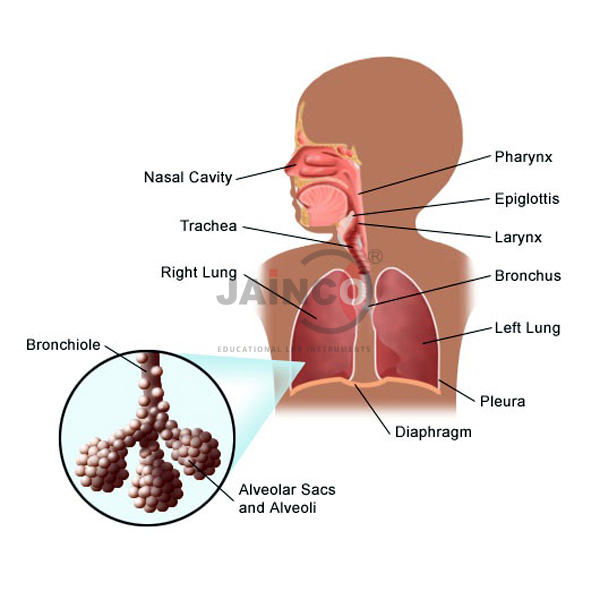
Product Code : JC-BE-6156
The Aerosol Impact Respiratory System Model (SKU JC-BE-6156) is an aerosol respiratory model showing how inhaled particles travel through the airways and where they settle according to size: larger particles are trapped in the nose and upper airway, smaller ones in the tracheobronchial tree, and the smallest reach the alveoli. It links aerosol exposure to respiratory health for physiology, environmental science, nursing and public health teaching. JaincoLab manufactures it in Ambala, India.
Specifications
The model is a physiology teaching model of aerosol deposition in the respiratory system, covering particle size and nasopharyngeal, tracheobronchial and alveolar deposition and their respiratory health impact; its dimensions, material and base are confirmed on the quotation.
| Product | Aerosol Impact Respiratory System Model |
| SKU | JC-BE-6156 |
| Model type | Physiology teaching model |
| Subject depicted | How inhaled aerosol particles travel through and deposit in the respiratory system |
| Topics shown | Aerosols, particle size, nasopharyngeal, tracheobronchial and alveolar deposition, and respiratory health impact |
| Size, material and base | Confirmed on the quotation |
Uses of the aerosol respiratory model
Teachers use the model to explain why particle size matters for breathing and health, a link that connects physiology with environmental science.
- Explaining how particle size decides where aerosols deposit
- Showing nasopharyngeal deposition
- Showing tracheobronchial deposition
- Showing alveolar deposition of fine particles
- Environmental science, public health and nursing teaching on air quality
Scope of supply and ordering
The listing covers one Aerosol Impact Respiratory System Model, a teaching model showing how inhaled aerosol particles travel through and deposit in the respiratory system. Any detail not given in the specification table, such as overall size, material or base, is confirmed on the quotation, together with accessories, spares and order quantities.
Frequently asked questions
Where do particles deposit according to the model?
Larger particles in the nose and upper airway, smaller particles in the tracheobronchial region and the smallest in the alveoli.
Which courses use this model?
Physiology, environmental science, public health and nursing courses that cover the respiratory effects of inhaled particles.
Related products
See the wider biology lab equipment range for related teaching models and laboratory apparatus from JaincoLab.
Request a quote
Request pricing for the Aerosol Impact Respiratory System Model (SKU JC-BE-6156) through the JaincoLab contact page, stating the number of models and where they are to be delivered, or write to [email protected]. For tender or project supply, see our tenders page.


