
Cancer Metabolism Model
Product Code : JC-BE-6152
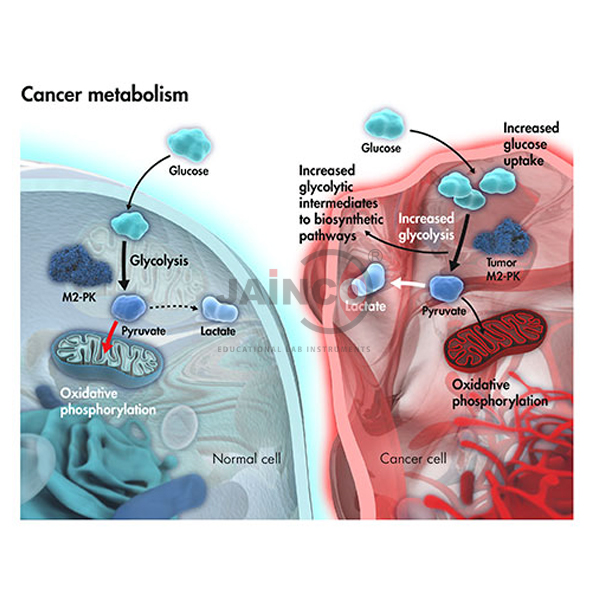
The Cancer Metabolism Model (SKU JC-BE-6152) is a cancer metabolism model showing how cancer cells reprogram their metabolism to support rapid growth: the Warburg effect, with high glucose uptake and lactate production, greater dependence on glutamine, and altered lipid metabolism for building new cells. It supports biochemistry, pathology and oncology teaching in B.Sc, M.Sc and medical courses. JaincoLab manufactures it in Ambala, India.
Specifications
The model is a biochemistry teaching model of metabolic reprogramming in cancer cells, covering the Warburg effect, glucose uptake, lactate production, glutamine metabolism and lipid metabolism; its dimensions, material and base are confirmed on the quotation.
| Product | Cancer Metabolism Model |
| SKU | JC-BE-6152 |
| Model type | Biochemistry teaching model |
| Subject depicted | How cancer cells reprogram their metabolism to support rapid growth |
| Topics shown | Warburg effect, glucose uptake, lactate production, glutamine metabolism, lipid metabolism and metabolic reprogramming |
| Size, material and base | Confirmed on the quotation |
Applications of the cancer metabolism model
Teachers use the model to contrast the metabolism of cancer cells with that of normal cells and to explain why tumours consume so much glucose.
- Explaining the Warburg effect
- Showing high glucose uptake and lactate production
- Explaining glutamine dependence
- Showing altered lipid metabolism
- Biochemistry and oncology lectures at M.Sc and medical level
Scope of supply and ordering
The listing covers one Cancer Metabolism Model, a teaching model showing how cancer cells reprogram their metabolism. Any detail not given in the specification table, such as overall size, material or base, is confirmed on the quotation, together with accessories, spares and order quantities.
Frequently asked questions
What metabolic changes does the model show?
The Warburg effect, increased glucose uptake and lactate production, glutamine metabolism and altered lipid metabolism.
Which related models are listed?
The Cancer Detoxification Model and the Biochemical Characteristics of Cancer Model cover connected topics.
Related products
- Cancer Detoxification Model
- Biochemical Characteristics of Cancer Model
- Biomolecular Markers in Prostate Cancer Development and Progression Model
- Glucose Metabolism Model
For a full laboratory set, see the biology lab equipment range from JaincoLab, which covers models and other teaching aids.
Request a quote
To order the Cancer Metabolism Model, send the SKU JC-BE-6152, the quantity and the delivery destination through the JaincoLab contact page or email [email protected]. For tender or project supply, see our tenders page.


