
Classification of Pathogenic Fungi Model
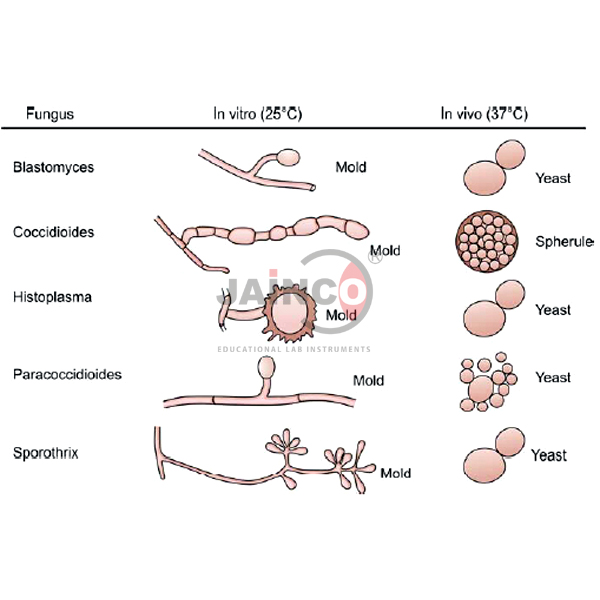
Product Code : JC-BE-6209
The Classification of Pathogenic Fungi Model (SKU JC-BE-6209) is a pathogenic fungi model that sorts the fungi of medical importance into five teaching groups: dermatophytes such as Trichophyton and Microsporum, yeasts such as Candida albicans, dimorphic fungi such as Histoplasma capsulatum, moulds such as Aspergillus, and opportunistic fungi such as Cryptococcus neoformans and Mucor. It is used in medical mycology, microbiology and B.Sc microbiology teaching. JaincoLab manufactures it in Ambala, India.
Specifications
The model is a microbiology teaching model classifying pathogenic fungi into dermatophytes, yeasts, dimorphic fungi, moulds and opportunistic fungi, each with named examples; its dimensions, material and base are not in the current product data and are confirmed on the quotation.
| Product | Classification of Pathogenic Fungi Model |
| SKU | JC-BE-6209 |
| Model type | Microbiology teaching model |
| Subject depicted | Classification of fungi that cause human disease |
| Topics shown | Dermatophytes (Trichophyton, Microsporum), yeasts (Candida albicans), dimorphic fungi (Histoplasma capsulatum), moulds (Aspergillus) and opportunistic fungi (Cryptococcus neoformans, Mucor) |
| Size, material and base | Confirmed on the quotation |
Uses of the pathogenic fungi model
Lecturers use the model to give students a framework for medical mycology, linking each fungal group with its typical form and the kind of infection it causes.
- Introducing dermatophytes and infection of skin, hair and nails
- Explaining budding yeasts such as Candida albicans
- Showing the mould-to-yeast change of dimorphic fungi
- Covering spore-forming moulds such as Aspergillus
- Discussing opportunistic fungi in immunocompromised hosts
Scope of supply and ordering
Each unit is a single Classification of Pathogenic Fungi Model depicting the main groups of pathogenic fungi, supplied for classroom and laboratory teaching. Construction details not listed above, and any accessories, spares and quantities, are confirmed on the quotation.
Frequently asked questions
Which fungal groups does the model classify?
Dermatophytes, yeasts, dimorphic fungi, moulds and opportunistic fungi.
Which example organisms are named?
Trichophyton, Microsporum, Candida albicans, Histoplasma capsulatum, Aspergillus, Cryptococcus neoformans and Mucor.
Related products
- Cutaneous and Subcutaneous Mycoses Model
- Bacterial Families Model
- Intestinal Protozoa Infection Model
- Classification of Virus Model
Browse the complete biology lab equipment range from JaincoLab for more teaching models, charts and apparatus.
Request a quote
To order the Classification of Pathogenic Fungi Model, send the SKU JC-BE-6209, the quantity and the delivery destination through the JaincoLab contact page or email [email protected]. Tender and project enquiries can be sent through the tenders page.


