
Epidemiology and Pathogenesis of Plague Model
Product Code : JC-BE-6191
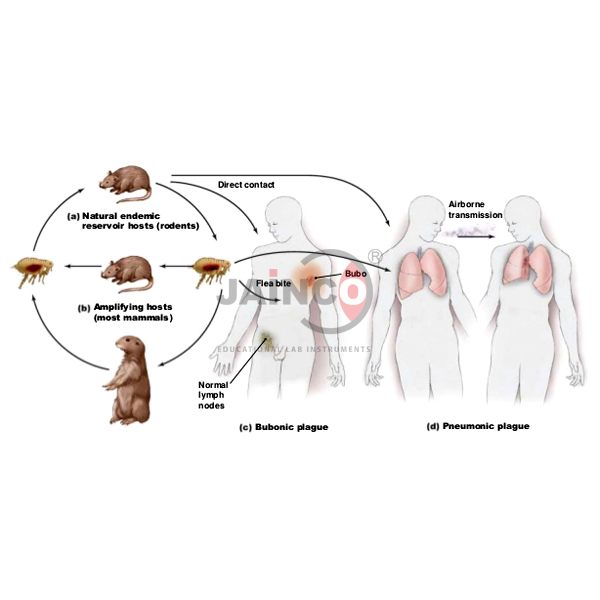
The Epidemiology and Pathogenesis of Plague Model (SKU JC-BE-6191) is a plague pathogenesis model that follows Yersinia pestis from its reservoir in wild rodents, through the bite of infected fleas, to disease in humans. It shows the three clinical forms, bubonic, septicaemic and pneumonic plague, and the bipolar staining of the organism. It is used in medical microbiology, community medicine and B.Sc microbiology teaching. JaincoLab manufactures it in Ambala, India.
Specifications
The model is a microbiology teaching model of plague, covering the causative organism, the rodent-flea-human transmission cycle and the bubonic, septicaemic and pneumonic forms; its dimensions, material and base are not in the current product data and are confirmed on the quotation.
| Product | Epidemiology and Pathogenesis of Plague Model |
| SKU | JC-BE-6191 |
| Model type | Microbiology teaching model |
| Subject depicted | Transmission cycle and clinical forms of plague caused by Yersinia pestis |
| Topics shown | Yersinia pestis with bipolar staining, the rodent-flea-human transmission cycle, and bubonic, septicaemic and pneumonic plague |
| Size, material and base | Confirmed on the quotation |
Uses of the plague pathogenesis model
Lecturers use the model to connect the epidemiology of plague with its disease stages, showing how a flea-borne infection can turn into one that spreads directly between people.
- Explaining the rodent-flea-human transmission cycle
- Showing the bipolar, 'safety pin' staining of Yersinia pestis
- Comparing bubonic, septicaemic and pneumonic plague
- Discussing person-to-person spread of the pneumonic form
- Community medicine and medical microbiology teaching
Scope of supply and ordering
One Epidemiology and Pathogenesis of Plague Model is supplied per listed unit, showing the transmission cycle and forms of plague for demonstration and self-study. Physical details not stated in the table, accessories, spares and quantities are all confirmed on the quotation.
Frequently asked questions
Which forms of plague does the model show?
Bubonic plague with swollen lymph nodes, septicaemic plague with spread into the bloodstream, and pneumonic plague, which spreads by respiratory droplets.
How is transmission shown?
As a cycle in which Yersinia pestis is maintained in wild rodents and passed to humans by the bite of infected fleas.
Related products
- Vibrio and Yersinia Species Model
- Yersinia Pestis and Species Model
- Enterobacteriaceae Model
- Bacterial Families Model
See the wider biology lab equipment range for related teaching models and laboratory apparatus from JaincoLab.
Request a quote
Send an enquiry for the Epidemiology and Pathogenesis of Plague Model with the quantity and delivery destination using the JaincoLab contact page or by email to [email protected]. Institutions and contractors buying under a tender can also reach us via the tenders page.


