
Hook Worm Male Female Model
Product Code : JC-BE-5212
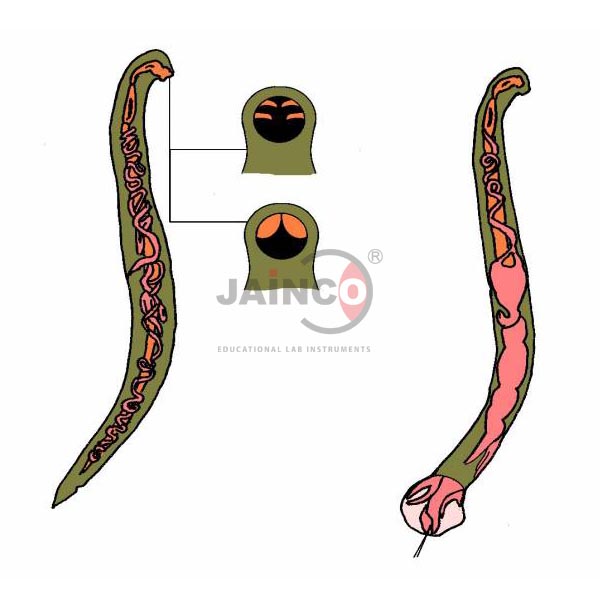
The Hook Worm Male Female Model (SKU JC-BE-5212) is a enlarged comparative teaching model depicting male and female hookworm compared. The male hookworm is smaller and ends in an umbrella-shaped copulatory bursa with rays, the female is larger with a straight tapering tail, and both carry the buccal capsule that attaches to the intestinal lining. As a hookworm male and female model, it gives schools, colleges, medical and public health institutes a reusable aid for teaching helminth morphology without a preserved specimen.
Specifications
The listing describes a enlarged comparative teaching model depicting male and female hookworm compared, recommended for parasitology and zoology teaching; size, material, base and mounting are not stated and are confirmed on the quotation.
| Product | Hook Worm Male Female Model |
| SKU | JC-BE-5212 |
| Model type | Enlarged comparative teaching model |
| Subject depicted | Male and female hookworm compared |
| Recommended use | Parasitology and zoology teaching |
| Male | Smaller; umbrella-shaped copulatory bursa with rays |
| Female | Larger; straight, tapering posterior with vulval opening |
| Buccal capsule | Present, attaches to intestinal mucosa |
Applications of the hookworm male and female model
The model is used in helminthology practicals to identify male and female worms and to relate the buccal capsule to blood loss and anaemia.
- Nematode morphology in B.Sc zoology and medical parasitology
- Helminthology practicals and viva preparation
- Anaemia and community health teaching
- Use with the hookworm life cycle model
Scope of supply and ordering
The listing covers one Hook Worm Male Female Model as a single teaching model. Its size, material, base and any key card are not given in the listing and are confirmed on the quotation.
Frequently asked questions
How are male and female hookworms distinguished?
The male is smaller with an umbrella-shaped copulatory bursa; the female is larger with a straight, tapering posterior end and vulval opening.
Who uses this model?
It is used in zoology, entomology and parasitology courses at schools, colleges and medical and public health training institutes.
Are the size and material stated?
No. The listing does not give size, material or mounting; these are confirmed on the quotation.
Related products
- Life Cycle of Hook Worm Model
- Life Cycle of Ancylostoma Duodenale Model
- Life Cycle of Guinea Worm Model
- Life Cycle of Ascaris Lumbricoides Model
More items are listed in the JaincoLab biology and zoology teaching models range.
Request a quote
To order the Hook Worm Male Female Model, send the number of models and the delivery destination through the JaincoLab contact page or email [email protected], quoting SKU JC-BE-5212. For tender or project supply, see our tenders page.


