
Koch's Postulate Model
Product Code : JC-BE-6159
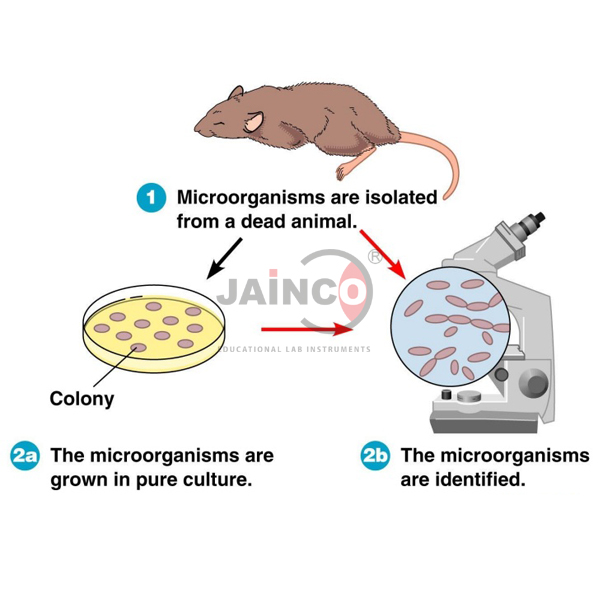
The Koch's Postulate Model (SKU JC-BE-6159) is a Koch's postulates model presenting, in sequence, the four criteria historically used to show that a particular microorganism causes a particular disease. It also explains the historical significance of the postulates and their recognised limitations for some pathogens. It is used in B.Sc microbiology, medical microbiology, nursing and school biology teaching. JaincoLab manufactures the model in Ambala, India.
Specifications
The model is a microbiology teaching model of Koch's four postulates, covering each postulate in turn, their historical significance and their limitations; its dimensions, material and base are confirmed on the quotation.
| Product | Koch's Postulate Model |
| SKU | JC-BE-6159 |
| Model type | Microbiology teaching model |
| Subject depicted | The four criteria historically used to establish a causal link between a microorganism and a disease |
| Topics shown | First to fourth postulates, historical significance and limitations |
| Size, material and base | Confirmed on the quotation |
Uses of the Koch's postulates model
Teachers use the model to explain the logic of proving microbial disease causation, and why the postulates do not apply neatly to every pathogen.
- Presenting the four postulates in order
- Explaining the logic of disease causation
- Discussing the historical significance of the postulates
- Explaining their limitations for certain pathogens
- Introductory microbiology lessons in B.Sc, medical and nursing courses
Scope of supply and ordering
One Koch's Postulate Model is supplied per listed unit, showing Koch's four postulates for linking a microorganism to a disease for demonstration and self-study. Physical details not stated in the table, accessories, spares and quantities are all confirmed on the quotation.
Frequently asked questions
What does the Koch's Postulate Model cover?
The four postulates in sequence, their historical significance and their limitations.
Does it discuss exceptions to the postulates?
Yes. It notes the recognised limitations of the postulates for certain pathogens.
Related products
- Bacterial Families Model
- Comparison of Prokaryotic and Eukaryotic Cells Model
- Innate Immunity Model
- Immunological Techniques Model
See the wider biology lab equipment range for related teaching models and laboratory apparatus from JaincoLab.
Request a quote
Send an enquiry for the Koch's Postulate Model with the quantity and delivery destination using the JaincoLab contact page or by email to [email protected]. Institutions and contractors buying under a tender can also reach us via the tenders page.


