
Helicobacter Disease and Infection Model
Product Code : JC-BE-6193
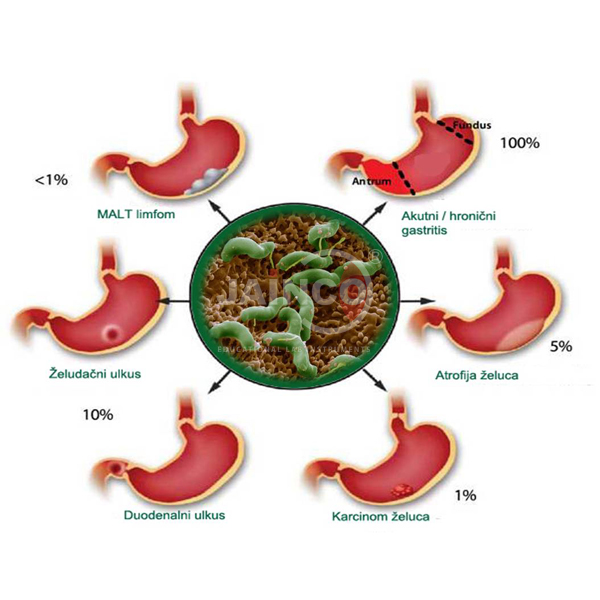
The Helicobacter Disease and Infection Model (SKU JC-BE-6193) is a Helicobacter pylori model showing how this spiral, flagellated bacterium lives in the gastric mucus layer. It shows urease turning urea into ammonia to buffer stomach acid, the antrum as the main colonisation site, the link with gastritis, peptic ulcer and gastric cancer, and the tests used to detect infection. It supports medical microbiology and B.Sc microbiology teaching. JaincoLab manufactures it in Ambala, India.
Specifications
The model is a microbiology teaching model of Helicobacter pylori infection, covering morphology, urease production, colonisation site, associated diseases and diagnostic tests; its dimensions, material and base are not in the current product data and are confirmed on the quotation.
| Product | Helicobacter Disease and Infection Model |
| SKU | JC-BE-6193 |
| Model type | Microbiology teaching model |
| Subject depicted | Colonisation of the stomach by Helicobacter pylori and associated disease |
| Topics shown | Morphology, urease production, colonisation of the gastric antrum, associated diseases and diagnostic tests |
| Size, material and base | Confirmed on the quotation |
Uses of the Helicobacter pylori model
Teachers use the model to explain how one bacterium survives in the acid of the stomach and why long-term infection is linked with chronic gastric disease.
- Showing the spiral, flagellated form of Helicobacter pylori
- Explaining how urease neutralises acid around the bacterium
- Locating colonisation in the gastric mucus layer of the antrum
- Introducing the urea breath test, rapid urease test and stool antigen test
- Medical microbiology and gastroenterology teaching
Scope of supply and ordering
Each unit is a single Helicobacter Disease and Infection Model depicting how Helicobacter pylori colonises the stomach, supplied for classroom and laboratory teaching. Construction details not listed above, and any accessories, spares and quantities, are confirmed on the quotation.
Frequently asked questions
Which diagnostic tests does the model present?
The urea breath test, rapid urease test, stool antigen test and histological examination.
Which diseases are linked on the model?
Chronic gastritis, peptic ulcer disease and an increased risk of gastric cancer and MALT lymphoma.
Related products
- Mechanism of Shigella Infection Model
- Escherichia and Salmonella Species Model
- Bacterial Families Model
- Normal Flora in Human Body Model
Browse the complete biology lab equipment range from JaincoLab for more teaching models, charts and apparatus.
Request a quote
To order the Helicobacter Disease and Infection Model, send the SKU JC-BE-6193, the quantity and the delivery destination through the JaincoLab contact page or email [email protected]. Tender and project enquiries can be sent through the tenders page.


