
Housefly Life Cycle Model
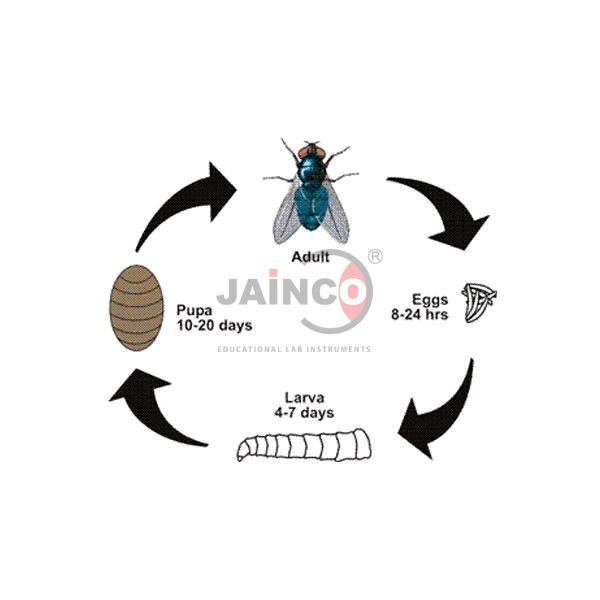
Product Code : JC-BE-5202
The Housefly Life Cycle Model (SKU JC-BE-5202) is a life cycle teaching model depicting housefly life cycle: egg, larva (maggot), pupa and adult. Houseflies lay eggs in batches on decaying matter, the maggots feed through three instars, the pupa forms inside a hardened puparium, and the adult carries microorganisms mechanically; the model shows each stage. As a housefly life cycle model, it gives schools, colleges, medical and public health institutes a reusable aid for teaching insect life cycles and sanitation without a preserved specimen.
Specifications
The listing describes a life cycle teaching model depicting housefly life cycle: egg, larva (maggot), pupa and adult, recommended for zoology, entomology and public health teaching; size, material, base and mounting are not stated and are confirmed on the quotation.
| Product | Housefly Life Cycle Model |
| SKU | JC-BE-5202 |
| Model type | Life cycle teaching model |
| Subject depicted | Housefly life cycle: egg, larva (maggot), pupa and adult |
| Recommended use | Zoology, entomology and public health teaching |
| Stages depicted | Egg, larva (maggot), pupa in puparium, adult |
Applications of the housefly life cycle model
The model is used in school science and public health teaching to explain complete metamorphosis and the link between flies, waste and disease.
- Insect life cycle lessons in school biology
- Sanitation and hygiene education
- Public health and community medicine teaching
- Comparison with mosquito and sand fly life cycle models
Scope of supply and ordering
The listing covers one Housefly Life Cycle Model as a single teaching model. Its size, material, base and any key card are not given in the listing and are confirmed on the quotation.
Frequently asked questions
Which stages does the Housefly Life Cycle Model show?
It shows the egg, larva (maggot), pupa within its puparium and the adult fly.
Who uses this model?
It is used in zoology, entomology and parasitology courses at schools, colleges and medical and public health training institutes.
Are the size and material stated?
No. The listing does not give size, material or mounting; these are confirmed on the quotation.
Related products
- Sand Fly Life Cycle Model
- Culex Life Cycle Model
- Anopheles Life Cycle Model
- Life Cycle of Rat Fly Model
More items are listed in the JaincoLab biology and zoology teaching models range.
Request a quote
To order the Housefly Life Cycle Model, send the number of models and the delivery destination through the JaincoLab contact page or email [email protected], quoting SKU JC-BE-5202. Buying under a laboratory tender? Use our tenders page.


