
Mechanism of Shigella Infection Model
Product Code : JC-BE-6190
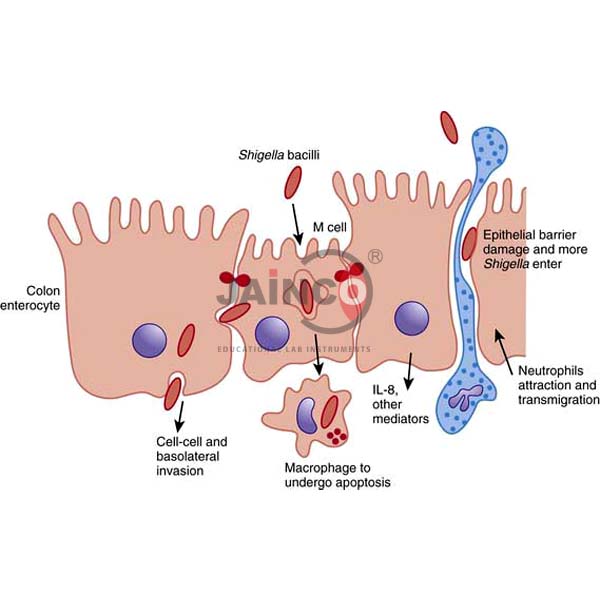
The Mechanism of Shigella Infection Model (SKU JC-BE-6190) is a Shigella infection model that shows, step by step, how Shigella species cross the intestinal lining through M cells, invade colonic epithelial cells and spread from cell to cell by actin-based movement. It also covers the part played by Shiga toxin in severe dysentery. The model is used in medical microbiology and pathology teaching and in B.Sc microbiology courses. JaincoLab manufactures it in Ambala, India.
Specifications
The model is a microbiology teaching model of the Shigella invasion sequence, from M cell entry through epithelial invasion to intracellular spread and Shiga toxin action; its dimensions, material and base are not in the current product data and are confirmed on the quotation.
| Product | Mechanism of Shigella Infection Model |
| SKU | JC-BE-6190 |
| Model type | Microbiology teaching model |
| Subject depicted | Invasion mechanism of Shigella in the colonic epithelium |
| Topics shown | Shigella as a Gram-negative, non-motile, non-lactose-fermenting rod; entry through M cells; invasion of colonic epithelial cells; actin-based cell-to-cell spread; Shiga toxin |
| Size, material and base | Confirmed on the quotation |
Uses of the Shigella infection model
Teachers use the model to walk students through bacillary dysentery at the cellular level and to show why Shigella avoids much of the extracellular immune response.
- Explaining M cell entry over lymphoid follicles
- Showing invasion of colonic epithelial cells and escape from the phagocytic vacuole
- Demonstrating actin-based spread into neighbouring cells
- Discussing Shiga toxin and its effect on protein synthesis
- Medical microbiology and pathology lectures
Scope of supply and ordering
Supply covers the Mechanism of Shigella Infection Model as listed: one model presenting how Shigella invades the colonic epithelium. Details the current product data does not give, including any stand or key card, accessories, spares and quantities, are confirmed on the quotation.
Frequently asked questions
Which stages of infection are shown?
Entry through M cells, invasion of colonic epithelial cells, escape into the cytoplasm and actin-based spread into adjacent cells.
Does the model cover Shiga toxin?
Yes. It shows Shiga toxin, produced by Shigella dysenteriae type 1, which inhibits protein synthesis and damages the intestinal lining.
Related products
- Escherichia and Salmonella Species Model
- Enterobacteriaceae Model
- Gram Positive and Gram Negative Cell Wall Model
- Helicobacter Disease and Infection Model
See the wider biology lab equipment range for related teaching models and laboratory apparatus from JaincoLab.
Request a quote
Send an enquiry for the Mechanism of Shigella Infection Model with the quantity and delivery destination using the JaincoLab contact page or by email to [email protected]. Buying under a laboratory tender? Use our tenders page.


