
Metabolism Xenobiotics in Cell Model
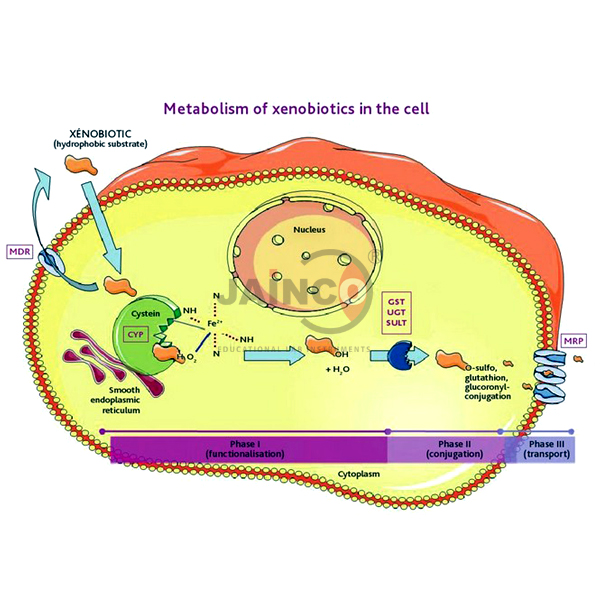
Product Code : JC-BE-6149
The Metabolism Xenobiotics in Cell Model (SKU JC-BE-6149) is a xenobiotic metabolism model showing how cells deal with foreign chemicals such as drugs: Phase I oxidation reactions driven by cytochrome P450 enzymes, Phase II conjugation reactions, and the route from exposure through detoxification to excretion. It supports biochemistry and pharmacology teaching in B.Sc, pharmacy and medical courses. JaincoLab manufactures it in Ambala, India.
Specifications
The model is a biochemistry teaching model of xenobiotic metabolism, covering Phase I and Phase II reactions, cytochrome P450, detoxification and excretion; its dimensions, material and base are confirmed on the quotation.
| Product | Metabolism Xenobiotics in Cell Model |
| SKU | JC-BE-6149 |
| Model type | Biochemistry teaching model |
| Subject depicted | How cells metabolise foreign chemical substances such as drugs |
| Topics shown | Xenobiotics, Phase I reactions, Phase II reactions, cytochrome P450, detoxification and excretion |
| Size, material and base | Confirmed on the quotation |
Applications of the xenobiotic metabolism model
Teachers use the model to explain how a foreign chemical is changed step by step into a form the body can excrete.
- Defining xenobiotics
- Explaining Phase I oxidation and the role of cytochrome P450
- Explaining Phase II conjugation
- Tracing detoxification to excretion
- Pharmacology and biochemistry lectures in pharmacy and medical courses
Scope of supply and ordering
Each unit is a single Metabolism Xenobiotics in Cell Model depicting how cells metabolise foreign chemicals such as drugs, supplied for classroom and laboratory teaching. Construction details not listed above, and any accessories, spares and quantities, are confirmed on the quotation.
Frequently asked questions
Which reactions does the model show?
Phase I oxidation reactions involving cytochrome P450 and Phase II conjugation reactions.
Is it suitable for pharmacy courses?
Yes. Drug metabolism is covered in pharmacy biochemistry and pharmacology teaching.
Related products
- Glucose Metabolism Model
- Bio Lipid Metabolism Model
- Purine and Pyrimidine Metabolism Model
- Ph Buffer System Acidosis Model
More models of this type are listed in the JaincoLab biology lab equipment range.
Request a quote
Request pricing for the Metabolism Xenobiotics in Cell Model (SKU JC-BE-6149) through the JaincoLab contact page, stating the number of models and where they are to be delivered, or write to [email protected]. Tender and project enquiries can be sent through the tenders page.


