
Comparison of Prokaryotic and Eukaryotic Cells Model
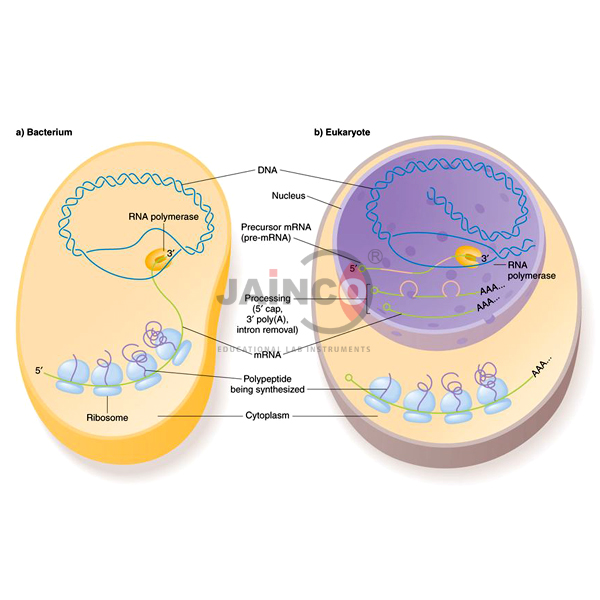
Product Code : JC-BE-6158
The Comparison of Prokaryotic and Eukaryotic Cells Model (SKU JC-BE-6158) is a prokaryotic and eukaryotic cell model that sets the two basic cell types side by side: whether a true nucleus and membrane-bound organelles are present, differences in cell size, DNA organisation and ribosome type, and how each divides. It is used in school biology, B.Sc cell biology and microbiology, and nursing and paramedical courses. JaincoLab manufactures it in Ambala, India.
Specifications
The model is a cell biology teaching model comparing prokaryotic and eukaryotic cells, covering the nuclear envelope, cell size, membrane-bound organelles, DNA organisation, ribosomes and cell division; its dimensions, material and base are confirmed on the quotation.
| Product | Comparison of Prokaryotic and Eukaryotic Cells Model |
| SKU | JC-BE-6158 |
| Model type | Cell biology teaching model |
| Subject depicted | Contrast between the two fundamental categories of cellular organisation |
| Topics shown | Nuclear envelope, cell size, membrane-bound organelles, DNA organisation, ribosomes and cell division |
| Size, material and base | Confirmed on the quotation |
Applications of the prokaryotic and eukaryotic cell model
Teachers use the model to draw out the differences between bacterial cells and the cells of plants, animals and fungi in one direct comparison.
- Comparing the presence of a nuclear envelope
- Comparing membrane-bound organelles
- Contrasting DNA organisation
- Comparing ribosome types
- Contrasting cell division in the two cell types
Scope of supply and ordering
Supply covers the Comparison of Prokaryotic and Eukaryotic Cells Model as listed: one model presenting the differences between prokaryotic and eukaryotic cells. Details the current product data does not give, including any stand or key card, accessories, spares and quantities, are confirmed on the quotation.
Frequently asked questions
What differences does the model compare?
Nuclear envelope, cell size, membrane-bound organelles, DNA organisation, ribosomes and cell division.
Is it suitable for school biology?
Yes. The comparison of prokaryotic and eukaryotic cells is part of school biology as well as B.Sc cell biology and microbiology.
Related products
See the wider biology lab equipment range for related teaching models and laboratory apparatus from JaincoLab.
Request a quote
Send an enquiry for the Comparison of Prokaryotic and Eukaryotic Cells Model with the quantity and delivery destination using the JaincoLab contact page or by email to [email protected]. Buying under a laboratory tender? Use our tenders page.


